

Holistic Ketamine Treatment: The Role of Inflammation in Depression
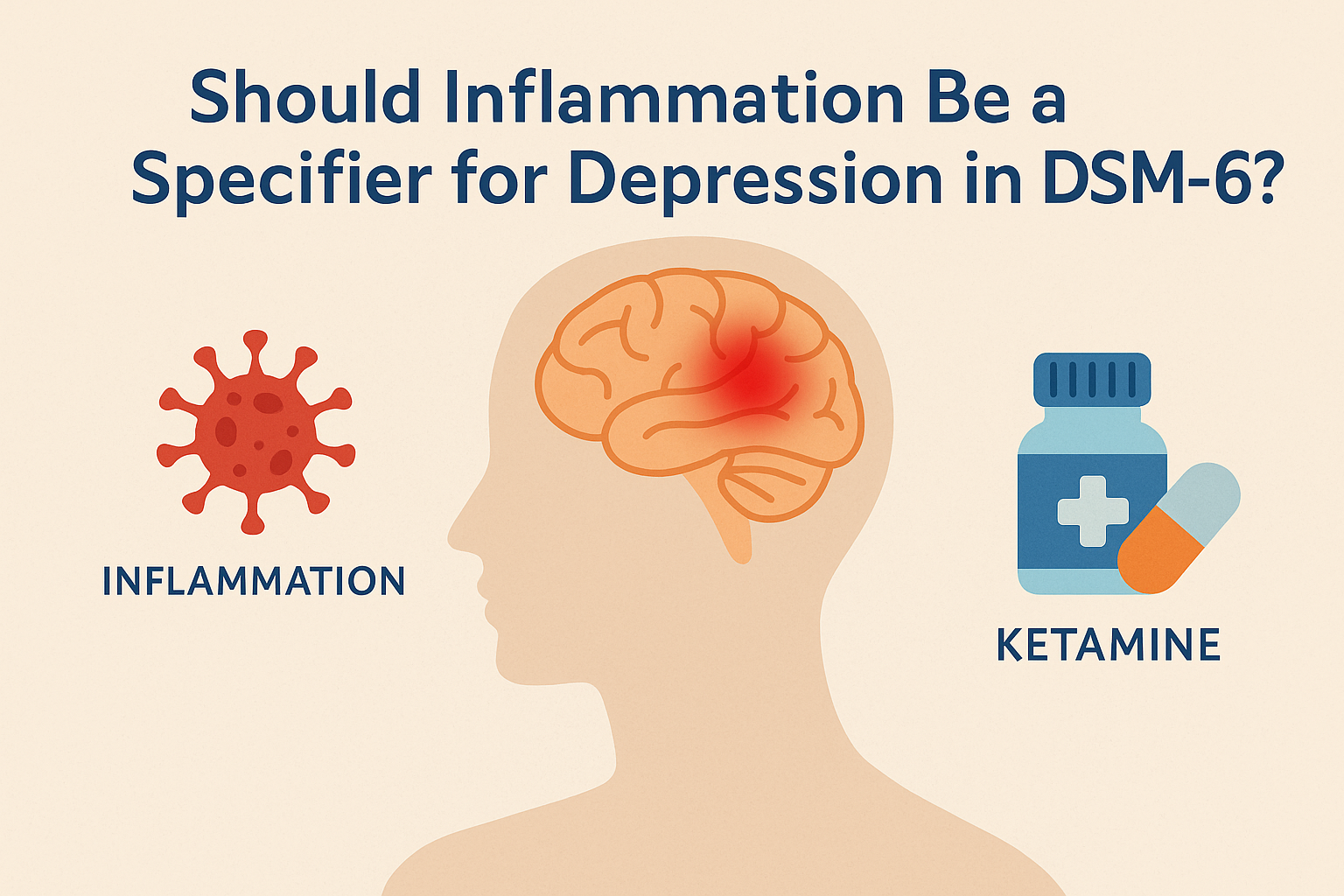
Should Inflammation Be a Specifier for Depression in DSM-6? Rethinking Diagnosis and the Role of Ketamine in Mental Health Care
A recent editorial in JAMA Psychiatry (2025) brings up a thought-provoking idea: Should inflammation be listed as a diagnostic specifier for Major Depressive Disorder (MDD) in the next edition of the DSM-6? According to experts like Drs. Manish K. Jha, Marion Leboyer, and Andrew H. Miller, the evidence is pointing in that direction.
Depression isn’t just one condition—it’s a broad category that shows up differently in different people. And now, growing research suggests that for some individuals, chronic inflammation in the body may play a major role in how depression develops and lingers. Recognizing this could open the door to more personalized, effective treatments—especially newer approaches like ketamine and psychedelic therapy.
Inflammation and Depression: What's the Connection?
Inflammation is part of the body’s natural defense system. But when it sticks around too long, it can start to harm rather than help—especially when it comes to the brain. Studies have shown that people with elevated inflammation markers, like CRP (C-reactive protein) or IL-6, often experience a version of depression that’s harder to treat with typical antidepressants.
Adding inflammation as a specifier in the DSM-6 could help clinicians identify this biological subtype of depression more easily. That would mean less trial-and-error with medications and more targeted, data-driven care right from the start.
How Ketamine Fits into the Picture
This is where ketamine becomes especially interesting. Known for its rapid antidepressant effects, ketamine works on glutamate receptors to boost neuroplasticity—the brain’s ability to form new pathways and heal from stress and trauma. This is especially helpful in parts of the brain like the hippocampus, which are often impacted by both depression and inflammation.
Some research even suggests that ketamine might help "reset" unhealthy memory patterns tied to trauma. This could be a game-changer for people dealing with treatment-resistant depression, especially when inflammation is part of the mix. At Áureo, our providers are already putting this research into practice.
A Holistic Approach to Mental Health
Our Naturopathic Doctors at Áureo are taking a comprehensive view of our patients’ health including inflammatory biomarkers and systemic signs and symptoms of inflammation. They’re combining lab work that screens for inflammation with ketamine-assisted treatment, lifestyle support (like nutrition and sleep optimization), and personalized treatment plans to meet patients where they are at.
These integrative approaches are gaining momentum as more people seek alternative treatments that support the whole person, not just mask or cover symptoms.
What This Means for the Future of Diagnosis and Treatment
If inflammation becomes an official specifier for depression in the DSM-6, it could mark a major shift in how we understand and treat mental health. For those looking for ketamine treatment, it could mean earlier, more accurate diagnoses and a broader range of tailored therapies—including ketamine for PTSD, anxiety, depression and chronic pain.
The bottom line? Depression is more complex than we once thought, and understanding inflammation’s role could bring us closer to real, lasting relief for many.
References
Jha MK, Leboyer M, Pariante CM, et al. Should inflammation be a specifier for major depression in the DSM-6? JAMA Psychiatry. 2025;82(6):549-550. doi:10.1001/jamapsychiatry.2025.0206
Miller AH, Raison CL. The role of inflammation in depression: from evolutionary imperative to modern treatment target. Nat Rev Immunol. 2016;16(1):22-34.
Dantzer R, O’Connor JC, Freund GG, et al. From inflammation to sickness and depression: when the immune system subjugates the brain. Nat Rev Neurosci. 2008;9(1):46-56.
Krystal JH, Abdallah CG, Sanacora G. Ketamine: a paradigm shift for depression research and treatment. Neuron. 2019;101(5):774-778.
Dore J, Turnipseed B, Dwyer S, et al. Ketamine therapy for depression in real-world care: treatment outcomes, dosing, and safety. J Affect Disord. 2019;247:56-61.

Written by Dr. Lindsay Wilkinson ND, LAc
Dr. Lindsay Wilkinson, ND, is a compassionate naturopathic doctor dedicated to empowering her patients to achieve optimal health and well-being. With a focus on integrative medicine, she combines evidence-based treatments with holistic approaches to address a wide range of health concerns. Dr. Wilkinson's passion lies in guiding her patients toward balanced wellness through personalized care and support.